
Artificial Intelligence
3 Ways to make your business presentation more relatable
Nemo enim ipsam voluptatem quia voluptas sit aspernatur aut odit aut fugit, sed quia consequuntur magni dolores.

Lorem ipsum dolor sit amet, consectetur adipisicing elit, sed do eiusmod tempor incididunt ut labore et dolore magna aliqua. Ut enim ad minim veniam, quis nostrud exercitation ullamco laboris nisi ut aliquip ex ea commodo consequat.
Nemo enim ipsam voluptatem quia voluptas sit aspernatur aut odit aut fugit, sed quia consequuntur magni dolores eos qui ratione voluptatem sequi nesciunt.
Et harum quidem rerum facilis est et expedita distinctio. Nam libero tempore, cum soluta nobis est eligendi optio cumque nihil impedit quo minus id quod maxime placeat facere possimus, omnis voluptas assumenda est, omnis dolor repellendus.
Nulla pariatur. Excepteur sint occaecat cupidatat non proident, sunt in culpa qui officia deserunt mollit anim id est laborum.
Sed ut perspiciatis unde omnis iste natus error sit voluptatem accusantium doloremque laudantium, totam rem aperiam, eaque ipsa quae ab illo inventore veritatis et quasi architecto beatae vitae dicta sunt explicabo.
“Duis aute irure dolor in reprehenderit in voluptate velit esse cillum dolore eu fugiat”
Neque porro quisquam est, qui dolorem ipsum quia dolor sit amet, consectetur, adipisci velit, sed quia non numquam eius modi tempora incidunt ut labore et dolore magnam aliquam quaerat voluptatem. Ut enim ad minima veniam, quis nostrum exercitationem ullam corporis suscipit laboriosam, nisi ut aliquid ex ea commodi consequatur.
At vero eos et accusamus et iusto odio dignissimos ducimus qui blanditiis praesentium voluptatum deleniti atque corrupti quos dolores et quas molestias excepturi sint occaecati cupiditate non provident, similique sunt in culpa qui officia deserunt mollitia animi, id est laborum et dolorum fuga.


Artificial Intelligence
Enterprises Do Not Have a Problem with Access to Technology, but with Choice
Once considered futuristic, artificial intelligence is now accessible to small and medium-sized businesses and increasingly integrated into everyday activities.

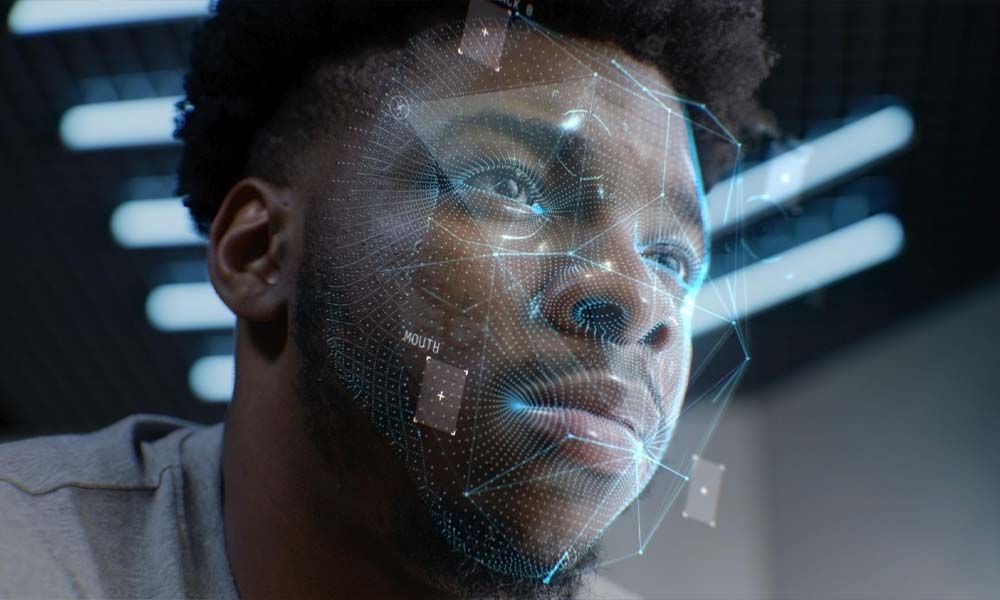
Just a few years ago, artificial intelligence seemed closer to the realm of fiction and was reserved for a few who dared to explore it. Today, it has already transcended barriers and made its way to SMBs as an accessible technology that is increasingly part of everyday life.
Most of these companies look to technology as an ally in which they must invest to grow, innovate and not be left behind. So, we can say that access is no longer the problem, giving way to a new challenge: making the right choice.
In a world of multiple options, deciding becomes more complex because not all tools respond to the needs of every SMB, nor do all investments generate the same impact on the business. Often, the difference between advancing and being left behind is not in how much is invested, but in how those decisions are made.
That choice is becoming even more important as AI itself evolves. We are moving from assistants that respond to individual prompts towards agentic AI systems that can reason, retrieve information, use tools and execute multi-step workflows. For SMBs, this creates new opportunities to automate routine work and increase what employees can accomplish, while allowing people to focus on customer relationships, creativity and higher-value decision-making.
At the same time, digital transformation continues to drive new demand: more connectivity, more data, more applications and greater demand on equipment. As AI becomes more deeply embedded in everyday work, the demands placed on computing resources will also grow. In this scenario, infrastructure, and in particular computing capacity, becomes an increasingly determining factor.
At AMD, we see this every day. That’s why we’re working to develop technologies that not only deliver high performance but also simplify decision-making. In this sense, AMD Ryzen™ AI processors mark a relevant change in how SMBs incorporate artificial intelligence into their daily operations. Integrating a neural processing unit (NPU) within the equipment allows suitable AI capabilities to run locally and efficiently on the device, without relying exclusively on the cloud. This enables features such as intelligent assistants, task automation, real-time data processing and user experience improvements, all with greater speed and efficiency.
As AI usage grows, there is also an economic dimension to that choice. Cloud AI remains an important part of the equation, but frequent AI and agentic workloads can also create recurring usage-based costs. Local AI gives SMBs another option for appropriate workloads, allowing them to consider capability, responsiveness, data control and ongoing cost when deciding where AI should run. It is not about choosing local AI over the cloud, but about having the flexibility to use each where it makes the most sense.
The impact goes beyond the technical. For SMBs, having AI-ready equipment means transforming the computer into an active ally that not only executes tasks, but also assists the user, automates processes, optimizes resources and improves decision-making.
Instead of adding complexity, integrated artificial intelligence can simplify everyday work and boost productivity without the need for large additional investments in infrastructure. More importantly, it gives SMBs greater flexibility to adopt AI according to their own needs, resources and business priorities.
Adopting this type of technology is not only an incremental improvement, but also a strategic decision that allows SMBs to scale with greater agility and be better prepared for an increasingly competitive environment.
At the end of the day, it’s about choosing technology that accompanies growth, rather than becoming a hindrance. SMBs have already taken the first step by adopting new tools and adapting them to their needs. The challenge now is to move forward and decide how to use them to generate real value because, on this path, more than having access to everything, what really makes the difference is knowing how to choose what is needed.

Alexey Navolokin is the General Manager of AMD APAC.
Artificial Intelligence
Privacy, job security concerns shape Filipinos’ views on AI
AI adoption is growing among Filipino workers, but concerns over misinformation, data privacy and job security highlight the need for proper training, safeguards and continued human oversight.


Artificial intelligence is gaining a foothold in Philippine workplaces and everyday digital activities, but concerns about inaccurate information, data privacy, job security and the need for human judgment could shape how widely Filipinos accept the technology.
A nationwide study by Sprout Solutions, reported by Philstar.com in July 2026, found that 78% of 3,516 Filipino employees surveyed across 13 industries used AI in their daily work.
However, only 35% said they had received training tailored to their specific roles, suggesting that adoption is advancing faster than workplace preparation.
Employees commonly used AI for communication, processing information and supporting decisions. The tools can also help users draft correspondence, summarize documents, organize ideas and complete repetitive tasks.
But growing use has not necessarily translated into confidence in relying on AI without human supervision.
The findings point to a need for workers to assess AI-generated material for accuracy and relevance rather than automatically accepting its recommendations.
Awareness differs across age and income groups
A September 2026 Pew Research Center survey of 42,151 adults in 36 countries found that younger Filipinos were more likely than older respondents to say they had heard or read a lot about AI.
Among Filipinos under 35, 53% of those from higher-income households said they had substantial awareness of AI, compared with 26% among their counterparts in lower-income households.
Greater familiarity, however, does not necessarily indicate regular use or trust in the technology.
Pew’s separate analysis of young adults also found that Filipinos under 35 were more likely than those aged 50 and older to believe AI could reduce employment opportunities over the next 20 years.
The findings suggest that younger people are becoming familiar with AI while also considering its possible effects on their future careers.
Concerns over accuracy and privacy
Questions about the reliability and security of AI tools remain significant.
The Philippine Survey Research Center’s 2026 Worldviews Survey, part of a study covering 45 countries, found that 48% of Filipino respondents were concerned about AI producing false information, while 36% worried about personal data breaches involving AI applications.
The Philippine survey covered 1,000 adults and had a reported margin of error of plus or minus three percentage points.
These concerns reflect the risks of relying on systems that can generate convincing but inaccurate responses and may involve the handling of personal information.
For users, understanding how AI works and recognizing its limitations are becoming important aspects of digital literacy.
This includes verifying information generated by AI, avoiding the disclosure of sensitive personal data and determining when a task requires human judgment.
Balancing convenience with human judgment
AI’s growing presence does not mean users want it involved in every aspect of their lives.
Some may find it useful for routine workplace tasks and organizing information but prefer human involvement in sensitive matters, personal interactions and important financial decisions.
Others may be willing to experiment with the technology while seeking clearer safeguards, better training and greater control over how their information is used.
For businesses and institutions, the challenge is to introduce AI in ways that improve productivity without weakening accountability or employees’ ability to make independent decisions.
The figures also suggest that access to AI tools alone is insufficient. Workers need appropriate training, while users need the skills to distinguish useful output from misleading information.
As AI becomes more common in workplaces and consumer applications, public acceptance will depend not only on its capabilities but also on whether people trust the systems and understand their consequences.
For Filipinos, the debate is increasingly shifting from whether AI should be used to where it can provide genuine benefits without compromising privacy, employment prospects and human judgment.
Artificial Intelligence
Google PH rolls out free AI training for teachers
Google Philippines partnered with DepEd, CHED and TESDA to provide free artificial intelligence training to Filipino teachers and faculty members through self-paced online modules launched October 13, 2026.

Google Philippines has partnered with the Department of Education, the Commission on Higher Education and the Technical Education and Skills Development Authority to provide free artificial intelligence training to Filipino teachers and faculty members.
Launched on October 13, 2026, the Google AI Educator Series offers self-paced online modules designed to help educators use AI for classroom activities, student research, personalized learning and administrative work. Sessions range from 15 to 45 minutes, allowing teachers to build skills around their existing schedules.
The modules demonstrate how Google’s AI tools can help teachers develop interactive learning experiences, organize lesson outlines, draft communications and guide students through research and problem-solving. Educators can earn digital badges as they complete training sessions.
The program’s central premise is that educators remain responsible for instruction, mentorship and academic judgment, while AI serves as an assistant for selected tasks. AI-generated lesson materials, explanations and research still require human review to check accuracy, relevance and alignment with learning objectives.
The partnership connects the training initiative with the country’s basic, higher and technical-vocational education systems.
DepEd has made the series available through the Bureau of Learning Delivery Hub, building on its existing AI upskilling initiatives.
The department is also working toward formal nationwide endorsement through a joint circular.
The planned arrangement includes National Educators Academy of the Philippines accreditation for Continuing Professional Development credit units needed for Professional Regulation Commission license renewal.
CHED plans to issue an advisory informing higher education institutions that the series is available as an optional professional development resource.
TESDA has integrated the series into the TESDA Online Program, making the training accessible through its free e-learning platform at e-tesda.gov.ph.
The training comes as education institutions face questions about academic integrity, data privacy and the reliability of AI-generated content.
DepEd’s foundational guidelines on artificial intelligence in basic education, issued under DepEd Order No. 003, s. 2026, recognize the need for clear policies addressing privacy, content accuracy and sound pedagogy.
The program’s short, self-paced format is intended to make training more manageable. Its effectiveness will depend on whether educators can translate the lessons into useful classroom practices and whether schools have the connectivity, equipment and policies needed to support adoption.
Teachers can explore the modules through the official Google AI Educator Series page or the TESDA Online Program.
Photo: From left: DepEd Undersecretary Marcelino Veloso III, TESDA Director General and Secretary Kiko Benitez, Asia Pacific Digital Transformation Lead – Google for Education Kimberley Hall, Google Philippines Country Manager Prep Palacios, and CHED Director Reniel Villaflor officially launch the Google AI Educator Series and the drive to certify Filipino teachers with recognized credentials. (Google Philippines)


From online prayers to digital candles, Filipinos find new ways to remember loved ones

PT Sports taps Dawn Bulls to compete in November Dota 2 tournaments

Digital Walker offers discounts on Apple devices, accessories at new Taguig store
From online prayers to digital candles, Filipinos find new ways to remember loved ones

Online gambling takes financial, personal toll on Filipino players
Digital Walker offers discounts on Apple devices, accessories at new Taguig store
-
 Features & Explainers2 days ago
From online prayers to digital candles, Filipinos find new ways to remember loved ones
-
 Features & Explainers7 months ago
Online gambling takes financial, personal toll on Filipino players
-
 Computing (PCs & Laptops)3 days ago
Digital Walker offers discounts on Apple devices, accessories at new Taguig store
-

 Artificial Intelligence4 days ago
Enterprises Do Not Have a Problem with Access to Technology, but with Choice
-
 Gaming & Esports2 days ago
PT Sports taps Dawn Bulls to compete in November Dota 2 tournaments
-

 Enterprise Tech1 week ago
TP recognized for sustainability, innovation at Asia CEO Awards
-
e-Government9 years ago
Disney’s live-action Aladdin finally finds its stars
-
Fintech & Digital Banking9 years ago
Steph Curry finally got the contract he deserves from the Warriors