
e-Government
How young is too young? Lawmakers debate social media age limits for children
Lawmakers are debating proposed age restrictions on social media, with differing views on whether children should be prohibited from accessing platforms until they reach 13 or 18 years old.


The debate over children’s access to social media is gaining ground in the Philippines, with lawmakers divided over whether users should be barred from the platforms until they turn 13 or 18.
The Senate and House of Representatives have approved separate measures seeking to restrict minors’ access to social media, reflecting growing concerns about online safety, cyberbullying, exploitation and exposure to harmful content.
The Senate approved Senate Bill 2424, or the SMART KIDS Act, by a vote of 16-1, with Senator Risa Hontiveros casting the lone dissenting vote.
The measure would prohibit individuals below 18 from accessing age-restricted social media platforms and require users to verify their ages through government-issued identification.
It would exempt services such as email, private messaging, educational platforms, news services and gaming applications, The Filipino Times reported.
The House adopted a less restrictive approach, approving House Bill 11566, or the SAFE KIDS Act, by a vote of 287-3 on Oct. 12.
The proposed measure would prohibit children below 13 from accessing social media, while allowing those aged 13 to under 18 to use the platforms under restrictions.
The two chambers must reconcile their differing age limits through a bicameral conference committee before the proposed legislation can be submitted to the president for approval.
Neither measure has become law.
Safety concerns versus access to technology
Supporters of the restrictions argue that younger users face risks from cyberbullying, online grooming, sexual exploitation and exposure to inappropriate material.
Online fraud is another concern. A Global Anti-Scam Alliance survey cited in the report found that one in five parents said their child had been victimized by a scam.
The proposed restrictions are intended to strengthen safeguards for minors as their use of digital platforms becomes more widespread.
But critics have questioned whether a broad prohibition would adequately address the risks while preserving the benefits children and families derive from online communication.
Hontiveros warned that restricting access could affect young people’s opportunities to earn income online and limit communication among families, particularly those with members working overseas.
She also raised concerns about the potential impact on the ability of users to report abuse, the Daily Tribune reported.
Experts question blanket restrictions
Mental health specialists and child welfare advocates have also called for a more targeted approach to regulating social media use among minors.
Dr. Anthony Grecia of the Philippine Mental Health Association said there was no clear scientific evidence establishing that social media directly causes violent behavior among young people.
Ace Diloy of the Stairway Foundation, meanwhile, advocated addressing potentially harmful platform features rather than relying solely on age-based restrictions.
These include infinite scrolling and algorithm-driven recommendations, which can influence the type and volume of content users encounter, The Manila Times reported.
The differing positions highlight a broader challenge for policymakers: protecting children from online harm without unnecessarily restricting access to information, communication and other digital opportunities.
The role of parents and schools
While lawmakers work toward a common version of the proposed legislation, families and schools remain important in helping children navigate online spaces.
Parents, teachers and older siblings can take an active role by discussing the content children encounter, understanding the applications they use and recognizing how online interactions affect their well-being.
Setting limits on screen time, including keeping meals free from electronic devices, can also encourage healthier digital habits.
Regular conversations about online experiences may help children identify inappropriate behavior, recognize potential scams and seek assistance when they encounter harmful content.
Ultimately, legislation can establish minimum safeguards, but protecting children online also requires continued guidance and involvement from families, educators and the wider community.




e-Government
DICT urges public to strengthen online security, protect personal data
The DICT called on the public to secure personal information and online accounts by following safer internet practices while remaining alert to cybersecurity threats.


The Department of Information and Communications Technology (DICT) has urged Filipinos to adopt safer online practices to protect their personal information and digital accounts from cybersecurity threats.
In an advisory issued on Wednesday, November 4, the agency recommended avoiding suspicious links, using strong passwords and enabling two-factor authentication (2FA) to reduce the risk of unauthorized access.
The DICT also cautioned users against sharing one-time passwords (OTPs), personal identification numbers (PINs) and other sensitive information.
The agency advised keeping devices updated and exercising caution when connecting to public Wi-Fi networks.
Users who detect suspicious online activity may report it through the DICT’s hotline 1326 or by sending email to 1326@dict.gov.ph.
The DICT said cybersecurity requires shared responsibility and urged the public to remain vigilant when using the internet.
e-Government
Marcos pushes for safer digital banking, wider internet access
Marcos seeks wider internet access and stronger cybersecurity to encourage Filipinos to adopt digital banking and online services.
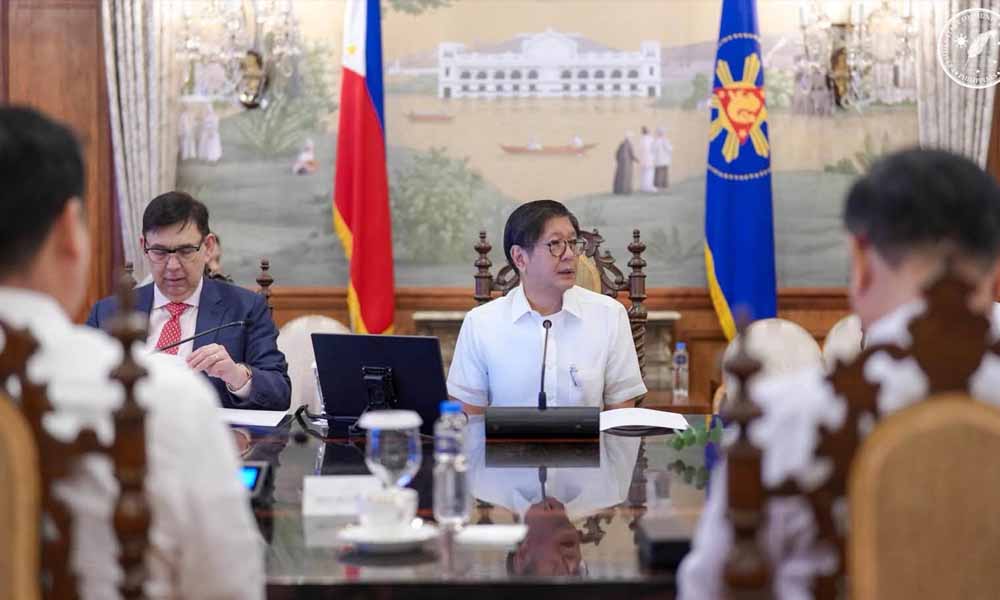
President Ferdinand Marcos Jr. is pushing for expanded internet access and stronger cybersecurity measures to encourage Filipinos to use digital banking and other online services.
Malacañang said the priorities were discussed during a meeting between Marcos and the Private Sector Advisory Council (PSAC) Digital Infrastructure Sector Group at Malacañan Palace on Tuesday, November 3.
The administration is seeking greater private-sector involvement in expanding internet infrastructure, particularly in remote communities where limited or unavailable connectivity restricts access to education, government services and business opportunities.
Marcos is also reviewing the progress of the Bayanihan SIM Project, which aims to provide connectivity to more Filipinos.
The government is placing emphasis on consumer protection and cybersecurity as financial transactions and commercial activities increasingly shift online. These measures are intended to help people and small businesses conduct digital banking, pay bills and sell products with greater confidence.
The administration also sees digital technology as a means of creating jobs and allowing micro, small and medium enterprises to reach wider markets without leaving their communities.
During the meeting, Marcos also reviewed private-sector proposals involving emerging industries, including the space economy, and ways to develop local talent and encourage skilled Filipino professionals to pursue careers in the country.
The government said closer cooperation with businesses would help build a more inclusive digital economy through improved connectivity, secure online services and expanded economic opportunities.
Artificial Intelligence
PLDT, Smart train Palawan government employees in AI use
Over 50 Palawan provincial government employees received AI training from PLDT and Smart to improve administrative efficiency and public service delivery.
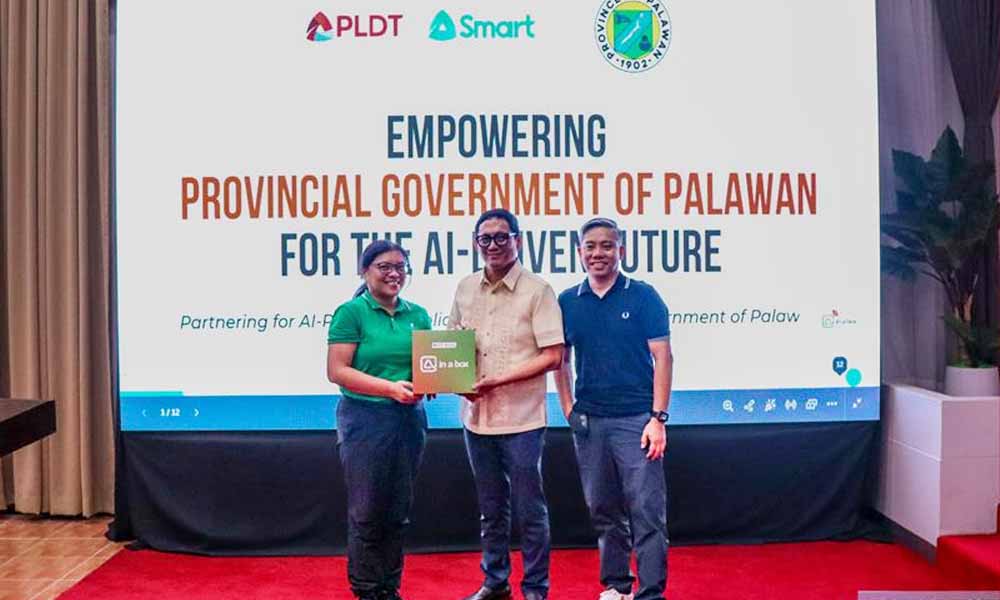
Smart representatives turned over the AI-in-a-Box package to Atty Sahagun (center). It contained a Smart 5G WiFi device, Smart prepaid load cards, and an AI tool subscription and is part of PLDT and Smart’s broader efforts to make emerging technologies more accessible through a combination of connectivity, digital tools, and learning opportunities.
More than 50 employees of the Palawan provincial government have undergone training on artificial intelligence (AI) applications as part of efforts to improve administrative processes and public service delivery.
The session was conducted by PLDT Inc. and Smart Communications Inc. under their AI-in-a-Box initiative, which aims to help local government units develop digital skills and explore the use of emerging technologies in government operations.
Participants from various provincial offices were introduced to AI tools that could assist with research, content development, administrative tasks and public engagement.
The initiative also included the turnover of an AI-in-a-Box package containing a Smart 5G WiFi device, prepaid load cards and an AI tool subscription.
Palawan Provincial Administrator Jefrie Sahagun, who opened the session on behalf of Gov. Amy Alvarez, said AI adoption should focus on improving the quality of public services.
He said technology could help government employees work more efficiently but should not replace human judgment, compassion and accountability.
Christian Anthony T. Villon, a supervising administrative officer and data protection officer at the provincial government, said employees were interested in using AI to handle routine tasks such as meeting transcription and other administrative work.
He also cited the potential of the technology to automate manual processes and speed up the delivery of government services.
PLDT and Smart said the initiative forms part of their efforts to support local government units through connectivity, digital tools and training opportunities.


DICT urges public to strengthen online security, protect personal data

Marcos pushes for safer digital banking, wider internet access

Smart expands 5G coverage in Siargao ahead of World Surf League event

From online prayers to digital candles, Filipinos find new ways to remember loved ones

Online gambling takes financial, personal toll on Filipino players

Digital Walker offers discounts on Apple devices, accessories at new Taguig store
-
 Features & Explainers4 days ago
From online prayers to digital candles, Filipinos find new ways to remember loved ones
-
 Features & Explainers7 months ago
Online gambling takes financial, personal toll on Filipino players
-
 Computing (PCs & Laptops)5 days ago
Digital Walker offers discounts on Apple devices, accessories at new Taguig store
-

 Artificial Intelligence6 days ago
Enterprises Do Not Have a Problem with Access to Technology, but with Choice
-

 Gaming & Esports4 days ago
PT Sports taps Dawn Bulls to compete in November Dota 2 tournaments
-

 Enterprise Tech2 weeks ago
TP recognized for sustainability, innovation at Asia CEO Awards
-

 Artificial Intelligence2 weeks ago
VST ECS chief urges businesses to move AI beyond pilot projects
-

 Gaming & Esports5 months ago
Nintendo opens first authorized store in PH