
Enterprise Tech
TP recognized for sustainability, innovation at Asia CEO Awards
TP in the Philippines won Sustainability Company of the Year and three other distinctions for innovation, service excellence and leadership at the Asia CEO Awards.


Business services provider TP in the Philippines was named Sustainability Company of the Year at the 17th Asia CEO Awards, while receiving three other distinctions recognizing its innovation, service performance and leadership.
The company said on October 23 it also received Circle of Excellence honors for Most Innovative Company of the Year and Service Excellence Company of the Year. Its Philippine chief executive, Rahul Jolly, was recognized in the CEO of the Year category.
The awards were presented at a ceremony at the Manila Marriott Grand Ballroom in Pasay City.
The recognition comes as TP marks 30 years of operations in the Philippines. The company operates 29 sites nationwide and employs about 60,000 people, whom it describes as an AI-ready workforce serving international brands across several industries.
TP said renewable energy accounted for 63% of its electricity consumption in 2025, while its carbon emissions intensity fell to 0.25 metric tons of carbon dioxide equivalent per employee. The company reported a 77% reduction in emissions per employee compared with 2019.
It also cited energy-saving initiatives at its facilities, including operations in LEED-certified buildings and participation in the annual Earth Hour campaign. Its sites collectively saved more than 33,000 kilowatt-hours of electricity through the initiative, according to the company.
Beyond environmental programs, TP reported that its Citizen of the World corporate social responsibility program mobilized 250 volunteers in 2025. They contributed 6,613 volunteer hours and provided 1.7 million pesos in support to more than 10,300 Filipinos.
The company also runs training and employment programs targeting jobseekers, students and people from underserved communities.
Its TP STEP program provides skills training for applicants seeking work in the information technology and business process management sector. Its impact-sourcing initiatives target groups including persons with disabilities, long-term unemployed individuals and underserved youth.
Meanwhile, its TP LaunchPad career-readiness program reached more than 20,000 students from over 40 partner schools in 2026, the company said.
TP also reported securing ISO 45001:2018 certification for occupational health and safety management and ISO 14001:2015 certification for environmental management across its site operations in 2025.
The company said its ninth consecutive Great Place to Work certification reflected its continuing workplace initiatives.
“Receiving this award reflects TP’s belief that lasting business success must go hand-in-hand with the well-being of people and the environment,” said Dipto Sen, chief financial officer of TP in the Philippines.
Sen said the company would continue efforts to expand employment opportunities, use resources responsibly and support communities.
The Asia CEO Awards recognizes individuals and organizations for contributions to economic development and the Philippines’ position as a business destination in the Asia-Pacific region.
Photo: Representing TP in the Philippines and receiving the awards during the Asia CEO Awards night were, from left, TP in the Philippines Media Relations Manager Adrian Elumba, Senior Director for Communications and Marketing David de Castro, Head of ANZ and Domestic Operations Patrick Lopez, Executive Vice President for Operations Toni Tompar, Vice President for Facilities, Administration & Security Eduardo Punzalan, Senior Director for Transformation KC Nunez, and Director for External Relations Nash Frias.
e-Government
Marcos pushes for safer digital banking, wider internet access
Marcos seeks wider internet access and stronger cybersecurity to encourage Filipinos to adopt digital banking and online services.


President Ferdinand Marcos Jr. is pushing for expanded internet access and stronger cybersecurity measures to encourage Filipinos to use digital banking and other online services.
Malacañang said the priorities were discussed during a meeting between Marcos and the Private Sector Advisory Council (PSAC) Digital Infrastructure Sector Group at Malacañan Palace on Tuesday, November 3.
The administration is seeking greater private-sector involvement in expanding internet infrastructure, particularly in remote communities where limited or unavailable connectivity restricts access to education, government services and business opportunities.
Marcos is also reviewing the progress of the Bayanihan SIM Project, which aims to provide connectivity to more Filipinos.
The government is placing emphasis on consumer protection and cybersecurity as financial transactions and commercial activities increasingly shift online. These measures are intended to help people and small businesses conduct digital banking, pay bills and sell products with greater confidence.
The administration also sees digital technology as a means of creating jobs and allowing micro, small and medium enterprises to reach wider markets without leaving their communities.
During the meeting, Marcos also reviewed private-sector proposals involving emerging industries, including the space economy, and ways to develop local talent and encourage skilled Filipino professionals to pursue careers in the country.
The government said closer cooperation with businesses would help build a more inclusive digital economy through improved connectivity, secure online services and expanded economic opportunities.
Artificial Intelligence
Enterprises Do Not Have a Problem with Access to Technology, but with Choice
Once considered futuristic, artificial intelligence is now accessible to small and medium-sized businesses and increasingly integrated into everyday activities.


Just a few years ago, artificial intelligence seemed closer to the realm of fiction and was reserved for a few who dared to explore it. Today, it has already transcended barriers and made its way to SMBs as an accessible technology that is increasingly part of everyday life.
Most of these companies look to technology as an ally in which they must invest to grow, innovate and not be left behind. So, we can say that access is no longer the problem, giving way to a new challenge: making the right choice.
In a world of multiple options, deciding becomes more complex because not all tools respond to the needs of every SMB, nor do all investments generate the same impact on the business. Often, the difference between advancing and being left behind is not in how much is invested, but in how those decisions are made.
That choice is becoming even more important as AI itself evolves. We are moving from assistants that respond to individual prompts towards agentic AI systems that can reason, retrieve information, use tools and execute multi-step workflows. For SMBs, this creates new opportunities to automate routine work and increase what employees can accomplish, while allowing people to focus on customer relationships, creativity and higher-value decision-making.
At the same time, digital transformation continues to drive new demand: more connectivity, more data, more applications and greater demand on equipment. As AI becomes more deeply embedded in everyday work, the demands placed on computing resources will also grow. In this scenario, infrastructure, and in particular computing capacity, becomes an increasingly determining factor.
At AMD, we see this every day. That’s why we’re working to develop technologies that not only deliver high performance but also simplify decision-making. In this sense, AMD Ryzen™ AI processors mark a relevant change in how SMBs incorporate artificial intelligence into their daily operations. Integrating a neural processing unit (NPU) within the equipment allows suitable AI capabilities to run locally and efficiently on the device, without relying exclusively on the cloud. This enables features such as intelligent assistants, task automation, real-time data processing and user experience improvements, all with greater speed and efficiency.
As AI usage grows, there is also an economic dimension to that choice. Cloud AI remains an important part of the equation, but frequent AI and agentic workloads can also create recurring usage-based costs. Local AI gives SMBs another option for appropriate workloads, allowing them to consider capability, responsiveness, data control and ongoing cost when deciding where AI should run. It is not about choosing local AI over the cloud, but about having the flexibility to use each where it makes the most sense.
The impact goes beyond the technical. For SMBs, having AI-ready equipment means transforming the computer into an active ally that not only executes tasks, but also assists the user, automates processes, optimizes resources and improves decision-making.
Instead of adding complexity, integrated artificial intelligence can simplify everyday work and boost productivity without the need for large additional investments in infrastructure. More importantly, it gives SMBs greater flexibility to adopt AI according to their own needs, resources and business priorities.
Adopting this type of technology is not only an incremental improvement, but also a strategic decision that allows SMBs to scale with greater agility and be better prepared for an increasingly competitive environment.

At the end of the day, it’s about choosing technology that accompanies growth, rather than becoming a hindrance. SMBs have already taken the first step by adopting new tools and adapting them to their needs. The challenge now is to move forward and decide how to use them to generate real value because, on this path, more than having access to everything, what really makes the difference is knowing how to choose what is needed.
Alexey Navolokin is the General Manager of AMD APAC.
Artificial Intelligence
VST ECS chief urges businesses to move AI beyond pilot projects
VST ECS chief Jimmy Go urged businesses to integrate artificial intelligence into core operations, moving beyond pilot projects to remain competitive.

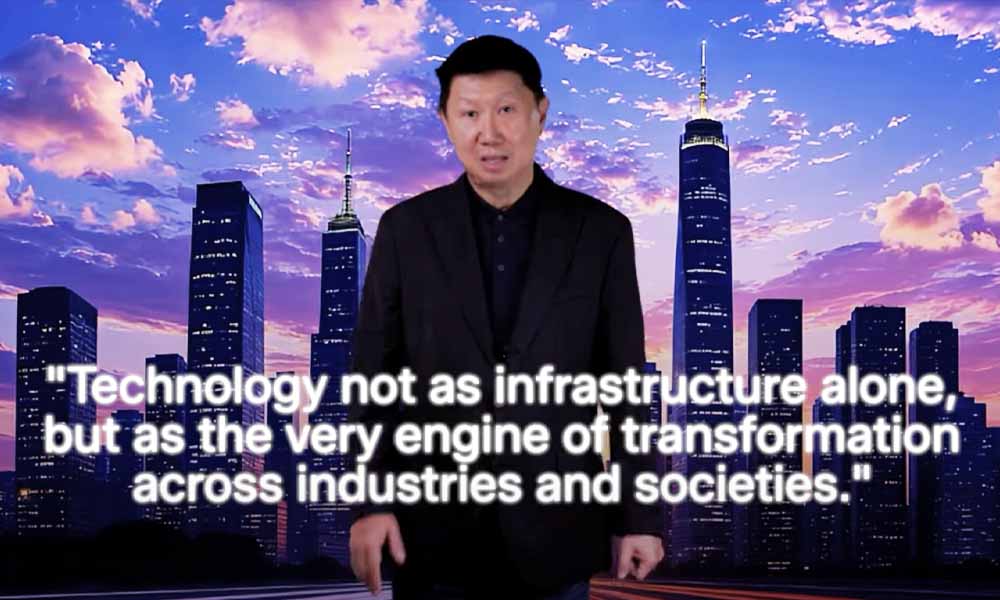
VST ECS Philippines President and Chief Executive Officer Jimmy Go has urged business leaders to accelerate the adoption of artificial intelligence, saying companies must move beyond pilot projects and integrate the technology into core operations to remain competitive.
In his welcome address for the ninth VST ECS CXO Tech Summit 2026 on October 21 held on Boracay Island, Go said AI was reshaping industries and changing how businesses operate, with applications ranging from customer service and credit scoring to demand forecasting, document processing and software development.
“2026 is the year to get results of AI,” Go said, describing the technology as a major driver of business transformation rather than simply an information technology support function.
He said companies that have moved AI applications into production were gaining advantages in efficiency, margins and scale, while warning that businesses risk falling behind if they delay adoption while waiting for technologies to become fully stable.
Go also pointed to growing demand for computing power as a major challenge for the technology sector, particularly shortages of high-bandwidth memory and server dynamic random-access memory (DRAM).
He said prices of memory and solid-state drives had more than doubled in recent months, with supply constraints expected to persist amid rising demand from artificial intelligence workloads.
Citing Micron Chief Executive Sanjay Mehrotra, Go said more than 75 percent of the company’s projected 2027 output had already been sold, with supply and demand conditions for memory and storage expected to tighten further in 2027 and 2028.
The shortages have affected several technology segments, according to Go. He said server and storage deployments had been pushed into 2027, while higher memory costs had prompted computer and smartphone manufacturers to adjust product configurations, prices and shipment targets.
Go also discussed the Philippines’ efforts to strengthen its position in the digital economy, citing policies on data sovereignty, investments in data centers and initiatives to develop local semiconductor and artificial intelligence infrastructure.
He cited the government’s updated data classification and data residency framework, as well as the reported plan by Amazon Web Services to invest $5 billion in establishing a Philippine cloud region.
Across local industries, he said manufacturers were using AI for supply chain optimization, quality control and enterprise resource planning, while financial technology companies were applying the technology to credit assessments and lending.
He also cited AI applications in business process outsourcing, healthcare, education and software development, while acknowledging persistent challenges involving infrastructure, skills shortages and organizational resistance.
Go said only 2 percent of firms had scaled AI beyond pilot projects, while connectivity gaps remained in rural areas.
He urged business leaders to strengthen partnerships among technology providers, vendors, channel partners and customers to help organizations adapt to rapid technological changes.
“Stop managing the present. Start architecting the future,” he said, calling on executives to make technology road maps central to corporate strategy and allow teams to experiment and scale successful initiatives.


DICT urges public to strengthen online security, protect personal data

Marcos pushes for safer digital banking, wider internet access

Smart expands 5G coverage in Siargao ahead of World Surf League event

From online prayers to digital candles, Filipinos find new ways to remember loved ones

Online gambling takes financial, personal toll on Filipino players

Digital Walker offers discounts on Apple devices, accessories at new Taguig store
-
 Features & Explainers4 days ago
From online prayers to digital candles, Filipinos find new ways to remember loved ones
-
 Features & Explainers7 months ago
Online gambling takes financial, personal toll on Filipino players
-
 Computing (PCs & Laptops)5 days ago
Digital Walker offers discounts on Apple devices, accessories at new Taguig store
-

 Artificial Intelligence6 days ago
Enterprises Do Not Have a Problem with Access to Technology, but with Choice
-

 Gaming & Esports4 days ago
PT Sports taps Dawn Bulls to compete in November Dota 2 tournaments
-
 Artificial Intelligence2 weeks ago
VST ECS chief urges businesses to move AI beyond pilot projects
-

 Gaming & Esports5 months ago
Nintendo opens first authorized store in PH
-
 Telecom & Connectivity1 week ago
PLDT Enterprise brings Starlink, digital solutions to Zamboanga businesses