
e-Government
DICT urges public to strengthen online security, protect personal data
The DICT called on the public to secure personal information and online accounts by following safer internet practices while remaining alert to cybersecurity threats.


The Department of Information and Communications Technology (DICT) has urged Filipinos to adopt safer online practices to protect their personal information and digital accounts from cybersecurity threats.
In an advisory issued on Wednesday, November 4, the agency recommended avoiding suspicious links, using strong passwords and enabling two-factor authentication (2FA) to reduce the risk of unauthorized access.
The DICT also cautioned users against sharing one-time passwords (OTPs), personal identification numbers (PINs) and other sensitive information.
The agency advised keeping devices updated and exercising caution when connecting to public Wi-Fi networks.
Users who detect suspicious online activity may report it through the DICT’s hotline 1326 or by sending email to 1326@dict.gov.ph.
The DICT said cybersecurity requires shared responsibility and urged the public to remain vigilant when using the internet.
e-Government
Marcos pushes for safer digital banking, wider internet access
Marcos seeks wider internet access and stronger cybersecurity to encourage Filipinos to adopt digital banking and online services.
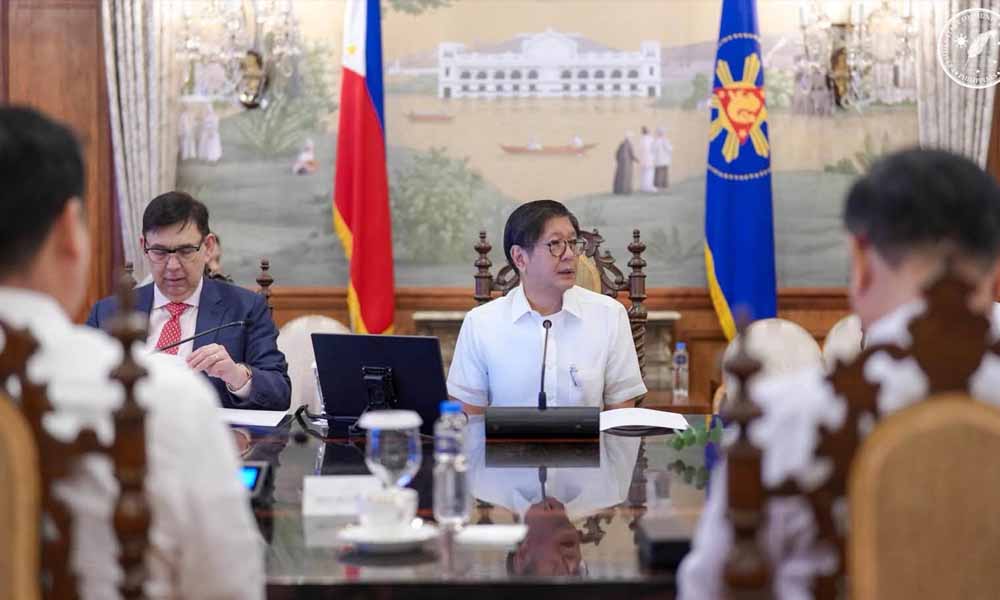
President Ferdinand Marcos Jr. is pushing for expanded internet access and stronger cybersecurity measures to encourage Filipinos to use digital banking and other online services.
Malacañang said the priorities were discussed during a meeting between Marcos and the Private Sector Advisory Council (PSAC) Digital Infrastructure Sector Group at Malacañan Palace on Tuesday, November 3.
The administration is seeking greater private-sector involvement in expanding internet infrastructure, particularly in remote communities where limited or unavailable connectivity restricts access to education, government services and business opportunities.
Marcos is also reviewing the progress of the Bayanihan SIM Project, which aims to provide connectivity to more Filipinos.
The government is placing emphasis on consumer protection and cybersecurity as financial transactions and commercial activities increasingly shift online. These measures are intended to help people and small businesses conduct digital banking, pay bills and sell products with greater confidence.
The administration also sees digital technology as a means of creating jobs and allowing micro, small and medium enterprises to reach wider markets without leaving their communities.
During the meeting, Marcos also reviewed private-sector proposals involving emerging industries, including the space economy, and ways to develop local talent and encourage skilled Filipino professionals to pursue careers in the country.
The government said closer cooperation with businesses would help build a more inclusive digital economy through improved connectivity, secure online services and expanded economic opportunities.
Artificial Intelligence
PLDT, Smart train Palawan government employees in AI use
Over 50 Palawan provincial government employees received AI training from PLDT and Smart to improve administrative efficiency and public service delivery.

Smart representatives turned over the AI-in-a-Box package to Atty Sahagun (center). It contained a Smart 5G WiFi device, Smart prepaid load cards, and an AI tool subscription and is part of PLDT and Smart’s broader efforts to make emerging technologies more accessible through a combination of connectivity, digital tools, and learning opportunities.
More than 50 employees of the Palawan provincial government have undergone training on artificial intelligence (AI) applications as part of efforts to improve administrative processes and public service delivery.
The session was conducted by PLDT Inc. and Smart Communications Inc. under their AI-in-a-Box initiative, which aims to help local government units develop digital skills and explore the use of emerging technologies in government operations.
Participants from various provincial offices were introduced to AI tools that could assist with research, content development, administrative tasks and public engagement.
The initiative also included the turnover of an AI-in-a-Box package containing a Smart 5G WiFi device, prepaid load cards and an AI tool subscription.
Palawan Provincial Administrator Jefrie Sahagun, who opened the session on behalf of Gov. Amy Alvarez, said AI adoption should focus on improving the quality of public services.
He said technology could help government employees work more efficiently but should not replace human judgment, compassion and accountability.
Christian Anthony T. Villon, a supervising administrative officer and data protection officer at the provincial government, said employees were interested in using AI to handle routine tasks such as meeting transcription and other administrative work.
He also cited the potential of the technology to automate manual processes and speed up the delivery of government services.
PLDT and Smart said the initiative forms part of their efforts to support local government units through connectivity, digital tools and training opportunities.
e-Government
NTC mobilizes regional offices for Undas 2026 public assistance
The NTC directed regional offices to coordinate with government and private groups in supporting public safety operations during Undas from Oct. 31 to Nov. 2.


The National Telecommunications Commission (NTC) has directed its regional offices nationwide to coordinate with government agencies and private sector groups in supporting public safety and emergency assistance operations during the observance of All Saints’ Day and All Souls’ Day from Oct. 31 to Nov. 2.
In a memorandum issued on Friday, October 30, NTC Commissioner Ella Blanca Lopez instructed regional directors to work with local government units, law enforcement agencies, disaster risk reduction offices and emergency response units in their respective areas.
The directive aims to ensure effective communications and coordination among agencies as millions of Filipinos are expected to visit cemeteries, memorial parks and other places to pay tribute to deceased relatives.
Regional offices were also ordered to monitor the operations of Civic Action Groups and Amateur Radio Groups, including their assigned routes, personnel locations, assistance posts and radio base stations throughout the Undas period.
The NTC said it would coordinate with telecommunications service providers when necessary to address reported service problems and help maintain reliable communications, particularly in areas expected to see increased public activity and mobile network traffic.
The commission also urged the public to observe safety advisories, take note of local emergency hotlines, keep mobile phones charged and maintain contact with family members. It reminded the public to use available communication channels responsibly, especially when requesting emergency assistance.


DICT urges public to strengthen online security, protect personal data

Marcos pushes for safer digital banking, wider internet access

Smart expands 5G coverage in Siargao ahead of World Surf League event

From online prayers to digital candles, Filipinos find new ways to remember loved ones

Online gambling takes financial, personal toll on Filipino players

Digital Walker offers discounts on Apple devices, accessories at new Taguig store
-
 Features & Explainers4 days ago
From online prayers to digital candles, Filipinos find new ways to remember loved ones
-
 Features & Explainers7 months ago
Online gambling takes financial, personal toll on Filipino players
-
 Computing (PCs & Laptops)5 days ago
Digital Walker offers discounts on Apple devices, accessories at new Taguig store
-

 Artificial Intelligence6 days ago
Enterprises Do Not Have a Problem with Access to Technology, but with Choice
-

 Gaming & Esports5 days ago
PT Sports taps Dawn Bulls to compete in November Dota 2 tournaments
-

 Enterprise Tech2 weeks ago
TP recognized for sustainability, innovation at Asia CEO Awards
-

 Artificial Intelligence2 weeks ago
VST ECS chief urges businesses to move AI beyond pilot projects
-

 Gaming & Esports5 months ago
Nintendo opens first authorized store in PH