
Artificial Intelligence
PLDT, Smart train Palawan government employees in AI use
Over 50 Palawan provincial government employees received AI training from PLDT and Smart to improve administrative efficiency and public service delivery.


Smart representatives turned over the AI-in-a-Box package to Atty Sahagun (center). It contained a Smart 5G WiFi device, Smart prepaid load cards, and an AI tool subscription and is part of PLDT and Smart’s broader efforts to make emerging technologies more accessible through a combination of connectivity, digital tools, and learning opportunities.
More than 50 employees of the Palawan provincial government have undergone training on artificial intelligence (AI) applications as part of efforts to improve administrative processes and public service delivery.
The session was conducted by PLDT Inc. and Smart Communications Inc. under their AI-in-a-Box initiative, which aims to help local government units develop digital skills and explore the use of emerging technologies in government operations.
Participants from various provincial offices were introduced to AI tools that could assist with research, content development, administrative tasks and public engagement.
The initiative also included the turnover of an AI-in-a-Box package containing a Smart 5G WiFi device, prepaid load cards and an AI tool subscription.
Palawan Provincial Administrator Jefrie Sahagun, who opened the session on behalf of Gov. Amy Alvarez, said AI adoption should focus on improving the quality of public services.
He said technology could help government employees work more efficiently but should not replace human judgment, compassion and accountability.
Christian Anthony T. Villon, a supervising administrative officer and data protection officer at the provincial government, said employees were interested in using AI to handle routine tasks such as meeting transcription and other administrative work.
He also cited the potential of the technology to automate manual processes and speed up the delivery of government services.
PLDT and Smart said the initiative forms part of their efforts to support local government units through connectivity, digital tools and training opportunities.



Artificial Intelligence
Enterprises Do Not Have a Problem with Access to Technology, but with Choice
Once considered futuristic, artificial intelligence is now accessible to small and medium-sized businesses and increasingly integrated into everyday activities.


Just a few years ago, artificial intelligence seemed closer to the realm of fiction and was reserved for a few who dared to explore it. Today, it has already transcended barriers and made its way to SMBs as an accessible technology that is increasingly part of everyday life.
Most of these companies look to technology as an ally in which they must invest to grow, innovate and not be left behind. So, we can say that access is no longer the problem, giving way to a new challenge: making the right choice.
In a world of multiple options, deciding becomes more complex because not all tools respond to the needs of every SMB, nor do all investments generate the same impact on the business. Often, the difference between advancing and being left behind is not in how much is invested, but in how those decisions are made.
That choice is becoming even more important as AI itself evolves. We are moving from assistants that respond to individual prompts towards agentic AI systems that can reason, retrieve information, use tools and execute multi-step workflows. For SMBs, this creates new opportunities to automate routine work and increase what employees can accomplish, while allowing people to focus on customer relationships, creativity and higher-value decision-making.
At the same time, digital transformation continues to drive new demand: more connectivity, more data, more applications and greater demand on equipment. As AI becomes more deeply embedded in everyday work, the demands placed on computing resources will also grow. In this scenario, infrastructure, and in particular computing capacity, becomes an increasingly determining factor.
At AMD, we see this every day. That’s why we’re working to develop technologies that not only deliver high performance but also simplify decision-making. In this sense, AMD Ryzen™ AI processors mark a relevant change in how SMBs incorporate artificial intelligence into their daily operations. Integrating a neural processing unit (NPU) within the equipment allows suitable AI capabilities to run locally and efficiently on the device, without relying exclusively on the cloud. This enables features such as intelligent assistants, task automation, real-time data processing and user experience improvements, all with greater speed and efficiency.
As AI usage grows, there is also an economic dimension to that choice. Cloud AI remains an important part of the equation, but frequent AI and agentic workloads can also create recurring usage-based costs. Local AI gives SMBs another option for appropriate workloads, allowing them to consider capability, responsiveness, data control and ongoing cost when deciding where AI should run. It is not about choosing local AI over the cloud, but about having the flexibility to use each where it makes the most sense.
The impact goes beyond the technical. For SMBs, having AI-ready equipment means transforming the computer into an active ally that not only executes tasks, but also assists the user, automates processes, optimizes resources and improves decision-making.
Instead of adding complexity, integrated artificial intelligence can simplify everyday work and boost productivity without the need for large additional investments in infrastructure. More importantly, it gives SMBs greater flexibility to adopt AI according to their own needs, resources and business priorities.
Adopting this type of technology is not only an incremental improvement, but also a strategic decision that allows SMBs to scale with greater agility and be better prepared for an increasingly competitive environment.

At the end of the day, it’s about choosing technology that accompanies growth, rather than becoming a hindrance. SMBs have already taken the first step by adopting new tools and adapting them to their needs. The challenge now is to move forward and decide how to use them to generate real value because, on this path, more than having access to everything, what really makes the difference is knowing how to choose what is needed.
Alexey Navolokin is the General Manager of AMD APAC.
Artificial Intelligence
VST ECS chief urges businesses to move AI beyond pilot projects
VST ECS chief Jimmy Go urged businesses to integrate artificial intelligence into core operations, moving beyond pilot projects to remain competitive.

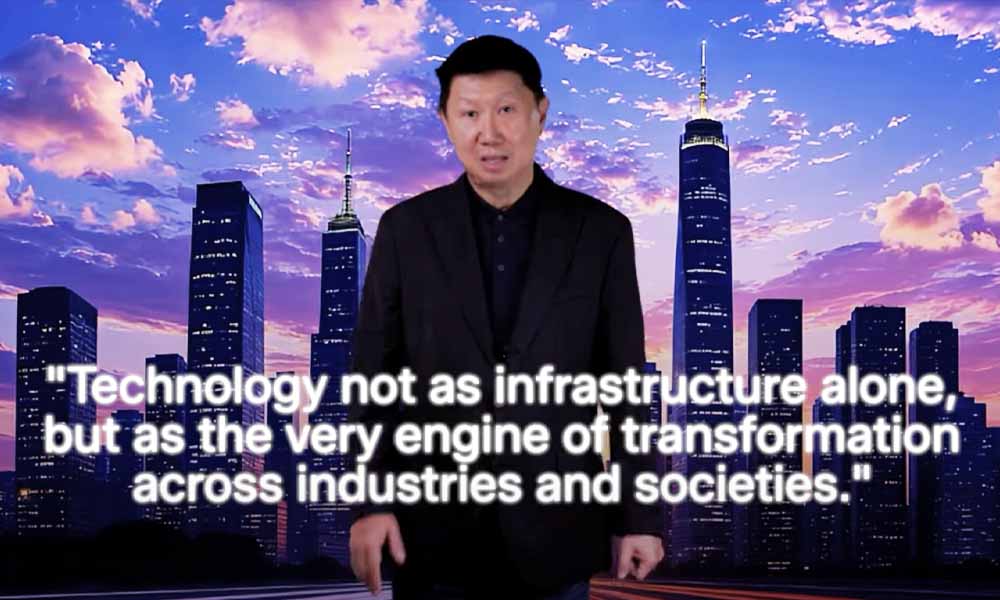
VST ECS Philippines President and Chief Executive Officer Jimmy Go has urged business leaders to accelerate the adoption of artificial intelligence, saying companies must move beyond pilot projects and integrate the technology into core operations to remain competitive.
In his welcome address for the ninth VST ECS CXO Tech Summit 2026 on October 21 held on Boracay Island, Go said AI was reshaping industries and changing how businesses operate, with applications ranging from customer service and credit scoring to demand forecasting, document processing and software development.
“2026 is the year to get results of AI,” Go said, describing the technology as a major driver of business transformation rather than simply an information technology support function.
He said companies that have moved AI applications into production were gaining advantages in efficiency, margins and scale, while warning that businesses risk falling behind if they delay adoption while waiting for technologies to become fully stable.
Go also pointed to growing demand for computing power as a major challenge for the technology sector, particularly shortages of high-bandwidth memory and server dynamic random-access memory (DRAM).
He said prices of memory and solid-state drives had more than doubled in recent months, with supply constraints expected to persist amid rising demand from artificial intelligence workloads.
Citing Micron Chief Executive Sanjay Mehrotra, Go said more than 75 percent of the company’s projected 2027 output had already been sold, with supply and demand conditions for memory and storage expected to tighten further in 2027 and 2028.
The shortages have affected several technology segments, according to Go. He said server and storage deployments had been pushed into 2027, while higher memory costs had prompted computer and smartphone manufacturers to adjust product configurations, prices and shipment targets.
Go also discussed the Philippines’ efforts to strengthen its position in the digital economy, citing policies on data sovereignty, investments in data centers and initiatives to develop local semiconductor and artificial intelligence infrastructure.
He cited the government’s updated data classification and data residency framework, as well as the reported plan by Amazon Web Services to invest $5 billion in establishing a Philippine cloud region.
Across local industries, he said manufacturers were using AI for supply chain optimization, quality control and enterprise resource planning, while financial technology companies were applying the technology to credit assessments and lending.
He also cited AI applications in business process outsourcing, healthcare, education and software development, while acknowledging persistent challenges involving infrastructure, skills shortages and organizational resistance.
Go said only 2 percent of firms had scaled AI beyond pilot projects, while connectivity gaps remained in rural areas.
He urged business leaders to strengthen partnerships among technology providers, vendors, channel partners and customers to help organizations adapt to rapid technological changes.
“Stop managing the present. Start architecting the future,” he said, calling on executives to make technology road maps central to corporate strategy and allow teams to experiment and scale successful initiatives.
Artificial Intelligence
Privacy, job security concerns shape Filipinos’ views on AI
AI adoption is growing among Filipino workers, but concerns over misinformation, data privacy and job security highlight the need for proper training, safeguards and continued human oversight.


Artificial intelligence is gaining a foothold in Philippine workplaces and everyday digital activities, but concerns about inaccurate information, data privacy, job security and the need for human judgment could shape how widely Filipinos accept the technology.
A nationwide study by Sprout Solutions, reported by Philstar.com in July 2026, found that 78% of 3,516 Filipino employees surveyed across 13 industries used AI in their daily work.
However, only 35% said they had received training tailored to their specific roles, suggesting that adoption is advancing faster than workplace preparation.
Employees commonly used AI for communication, processing information and supporting decisions. The tools can also help users draft correspondence, summarize documents, organize ideas and complete repetitive tasks.
But growing use has not necessarily translated into confidence in relying on AI without human supervision.
The findings point to a need for workers to assess AI-generated material for accuracy and relevance rather than automatically accepting its recommendations.
Awareness differs across age and income groups
A September 2026 Pew Research Center survey of 42,151 adults in 36 countries found that younger Filipinos were more likely than older respondents to say they had heard or read a lot about AI.
Among Filipinos under 35, 53% of those from higher-income households said they had substantial awareness of AI, compared with 26% among their counterparts in lower-income households.
Greater familiarity, however, does not necessarily indicate regular use or trust in the technology.
Pew’s separate analysis of young adults also found that Filipinos under 35 were more likely than those aged 50 and older to believe AI could reduce employment opportunities over the next 20 years.
The findings suggest that younger people are becoming familiar with AI while also considering its possible effects on their future careers.
Concerns over accuracy and privacy
Questions about the reliability and security of AI tools remain significant.
The Philippine Survey Research Center’s 2026 Worldviews Survey, part of a study covering 45 countries, found that 48% of Filipino respondents were concerned about AI producing false information, while 36% worried about personal data breaches involving AI applications.
The Philippine survey covered 1,000 adults and had a reported margin of error of plus or minus three percentage points.
These concerns reflect the risks of relying on systems that can generate convincing but inaccurate responses and may involve the handling of personal information.
For users, understanding how AI works and recognizing its limitations are becoming important aspects of digital literacy.
This includes verifying information generated by AI, avoiding the disclosure of sensitive personal data and determining when a task requires human judgment.
Balancing convenience with human judgment
AI’s growing presence does not mean users want it involved in every aspect of their lives.
Some may find it useful for routine workplace tasks and organizing information but prefer human involvement in sensitive matters, personal interactions and important financial decisions.
Others may be willing to experiment with the technology while seeking clearer safeguards, better training and greater control over how their information is used.
For businesses and institutions, the challenge is to introduce AI in ways that improve productivity without weakening accountability or employees’ ability to make independent decisions.
The figures also suggest that access to AI tools alone is insufficient. Workers need appropriate training, while users need the skills to distinguish useful output from misleading information.
As AI becomes more common in workplaces and consumer applications, public acceptance will depend not only on its capabilities but also on whether people trust the systems and understand their consequences.
For Filipinos, the debate is increasingly shifting from whether AI should be used to where it can provide genuine benefits without compromising privacy, employment prospects and human judgment.


DICT urges public to strengthen online security, protect personal data

Marcos pushes for safer digital banking, wider internet access

Smart expands 5G coverage in Siargao ahead of World Surf League event

From online prayers to digital candles, Filipinos find new ways to remember loved ones

Online gambling takes financial, personal toll on Filipino players

Digital Walker offers discounts on Apple devices, accessories at new Taguig store
-
 Features & Explainers4 days ago
From online prayers to digital candles, Filipinos find new ways to remember loved ones
-
 Features & Explainers7 months ago
Online gambling takes financial, personal toll on Filipino players
-
 Computing (PCs & Laptops)5 days ago
Digital Walker offers discounts on Apple devices, accessories at new Taguig store
-

 Artificial Intelligence6 days ago
Enterprises Do Not Have a Problem with Access to Technology, but with Choice
-

 Gaming & Esports5 days ago
PT Sports taps Dawn Bulls to compete in November Dota 2 tournaments
-

 Enterprise Tech2 weeks ago
TP recognized for sustainability, innovation at Asia CEO Awards
-

 Artificial Intelligence2 weeks ago
VST ECS chief urges businesses to move AI beyond pilot projects
-

 Gaming & Esports5 months ago
Nintendo opens first authorized store in PH